Every business wants to reach the SEO first page because that's where customers look for solutions. The truth is, ranking high on Google isn't magic - it's a set of strategic actions that anyone can learn and implement. Users constantly search for answers like how to get my website on the Google first page, how to get on search engines, or how to make your website show up first on Google.
Competition for top rankings is fierce. The first page of Google captures over 90% of all search traffic, with the top three results getting the majority of clicks. Missing the first page means missing potential customers actively looking for what you offer. With proper SEO, businesses of any size can reach the SEO first position and attract more qualified leads.
This guide provides a practical, step-by-step approach based on proven strategies. You'll learn exactly what Google looks for, which specific actions drive rankings, and how to implement changes that deliver measurable results.
How Google Chooses What to Rank on the First Page
Google's mission is to provide the most relevant, trustworthy, and useful results for every search query. Understanding how Google decides how to make your website show up on Google first helps you optimize effectively.
Google evaluates hundreds of ranking signals that fall into four main categories:
Relevance: Does your content match what the user is searching for? Google analyzes your keywords, content topics, and how well you answer the search intent behind each query.
Authority: Is your website trustworthy and credible? Google considers backlink quality, brand mentions, reviews, and overall web reputation.
User experience: Do visitors have a positive interaction with your site? Google measures page speed, mobile-friendliness, navigation, and whether users find what they need quickly.
Content quality: Does your content provide genuine value? Google favors comprehensive, well-researched content that thoroughly answers questions rather than thin or keyword-stuffed pages.
These factors work together to determine rankings. The websites that consistently rank on the SEO first page excel across all four categories.
Key Signals That Influence How Your Website Appears in Google Search
Understanding specific ranking signals helps you prioritize improvements that deliver the biggest impact on how to get on Google search results:
Keyword optimization: Strategically placing target keywords in titles, headers, URLs, and naturally throughout the content tells Google what your page is about. Keywords must match user intent.
Strong backlinks: Quality backlinks from reputable websites act as votes of confidence. One link from an authoritative site carries more weight than dozens of low-quality links.
Mobile-friendly design: Over 60% of searches happen on mobile devices. Google uses mobile-first indexing, primarily evaluating the mobile version of your site.
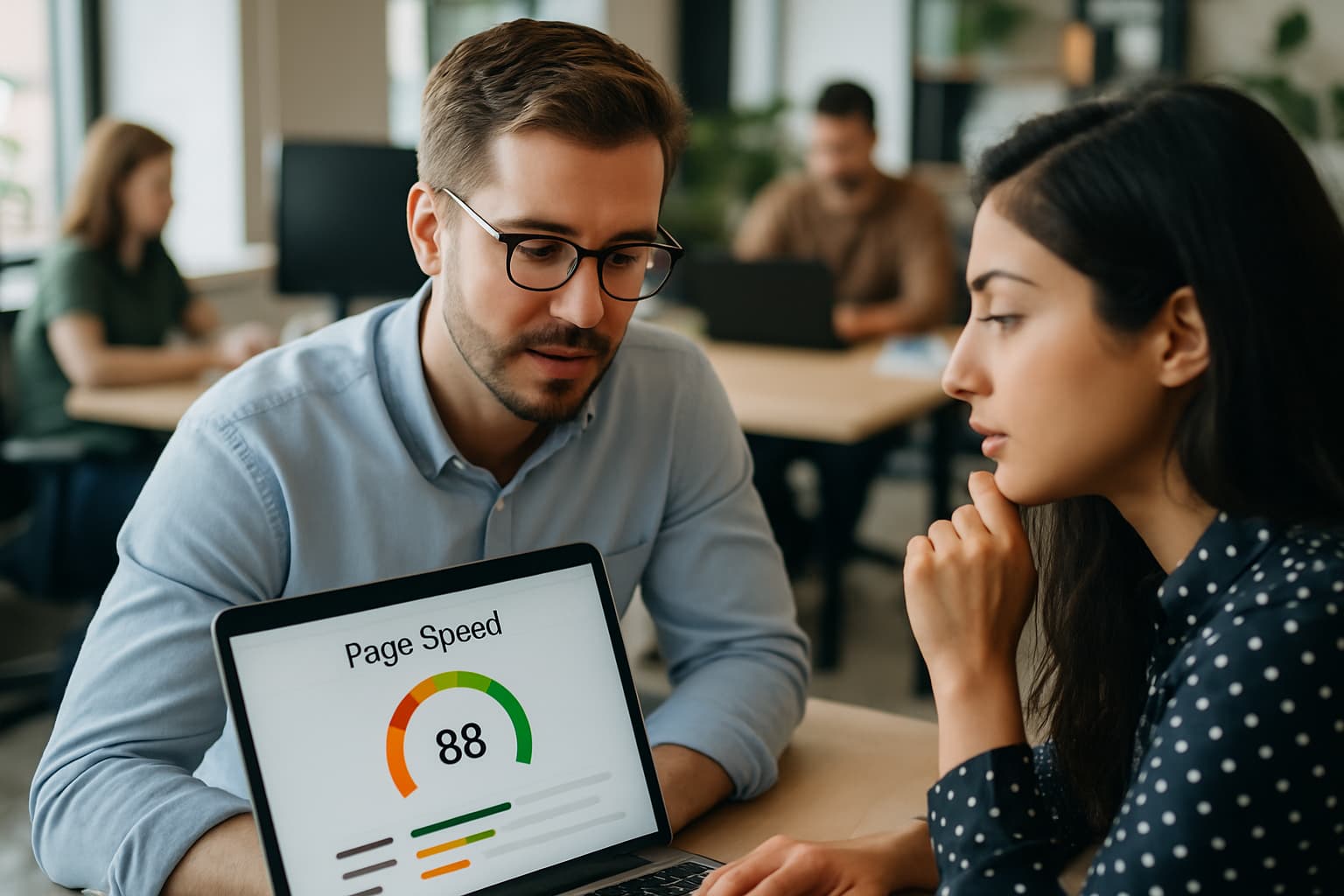
Fast loading speed: Pages that load in under 3 seconds rank higher and keep visitors engaged. Slow sites frustrate users and signal poor quality.
Positive user behavior: When visitors spend time on your site and don't immediately bounce back to search results, it signals that your content satisfies their needs.
Fresh content: Regularly updated pages signal relevance and accuracy, especially for topics that change frequently.
Improving these signals doesn't just boost rankings - it also increases conversions. Understanding how to rank in Google search means recognizing that SEO improvements benefit both search engines and real users.
On-Page SEO: The Foundation of Getting on Google's First Page
On-page SEO refers to optimizations you control directly on your website. These fundamental practices form the foundation of how to make your website show up first on Google.
Here are the essential on-page elements:
Keyword research: Identify what your potential customers actually search for. Use tools like Google Keyword Planner, Semrush, or Ahrefs to find keywords with good search volume and realistic competition.
Optimized titles: Your page title should include your primary keyword near the beginning, stay under 60 characters, and clearly describe what the page offers.
Compelling meta descriptions: Write clear descriptions under 160 characters that include your target keyword and encourage clicks.
Strategic header structure: Use H1 tags for main titles and H2-H3 tags for subheadings. Headers should include relevant keywords naturally and organize content logically.
Internal linking: Link related pages together using descriptive anchor text. This helps Google understand your site structure and distribute authority across pages.
Valuable content: Create comprehensive content that thoroughly answers questions and solves problems. Quality matters more than word count.
Optimized images: Compress images for faster loading, use descriptive file names, and add alt text.
URL structure: Keep URLs short, descriptive, and keyword-rich. Use hyphens to separate words.
These on-page elements work together to signal relevance and quality. Neglecting any of them makes reaching the SEO first position much harder.
Content That Ranks: How to Create Pages Google Wants to Show First
Creating content that reaches the SEO first page requires more than just including keywords. Google rewards pages that genuinely help users and provide superior value.
Match search intent: Understand why people search for your target keyword. Are they looking for information, comparing options, or ready to buy? Your content must match this intent precisely.
Use strategic keywords naturally: Include your primary keyword in the title, the first paragraph, several headers, and throughout the content. Add related keywords to fully cover the topic.
Solve real problems: Address specific questions, provide actionable advice, and offer clear solutions. Generic content won't compete with pages that dive deep and deliver genuine value.
Demonstrate expertise: Back up claims with data, cite sources, and show real experience. Google's E-E-A-T guidelines significantly influence rankings.
Format for readability: Break up text with short paragraphs, bullet points, numbered lists, and subheadings. Easy-to-scan content keeps readers engaged.
Avoid fluff: Every sentence should contribute value. Remove unnecessary introductions and vague generalizations that waste readers' time.
Quality, clarity, and depth help websites reach the SEO first position because Google recognizes when content genuinely serves users better than competing pages.
Off-Page SEO: Building the Authority Google Can't Ignore
Off-page SEO refers to actions outside your website that influence how your website ranks on Google search results. Building authority through external signals proves to Google that others trust your content.
Here are the key off-page factors:
Quality backlinks: Earn links from reputable websites through guest posting, creating linkable assets (research, tools, guides), and building relationships with influencers. One high-quality link beats dozens of low-quality directory submissions.
Brand mentions: Even unlinked mentions of your brand signal authority. Press coverage, podcast appearances, and social media discussions contribute to your reputation.
Customer reviews: Positive reviews on Google and industry-specific platforms build trust and influence rankings. Actively encourage satisfied customers to leave reviews.
Digital PR: Earning media coverage through newsworthy stories or original research creates authoritative backlinks and increases brand awareness.
Social signals: Social media activity drives traffic, increases brand searches, and can lead to natural backlinks when content gets shared widely.
These off-page factors build credibility that Google can't ignore. Websites with strong backlink profiles and positive brand signals consistently outrank competitors with weaker authority.Focus on earning quality over quantity, building genuine relationships, and creating content that naturally links well. Combined with strong on-page optimization, authoritative off-page signals push your website toward sustainable long-term visibility and the SEO first position.
Understanding the ins and outs of website growth, we help ensure that your site grows over time with ever-increasing reach and accessibility. Not only do we employ the latest digital marketing techniques for driving traffic directly to your website, but our strategies also focus on gaining loyalty from those visitors so they come back again and again.
Leave your contacts to get a comprehensive and aggressive digital marketing plan taking your business to new heights.